The past few months have been a bit hectic for me, personally and professionally. After ten years on the council waiting list, my family finally received a council house. Out of the blue, we were notified that we were to be offered a house, were given a date for the viewing and that we had to pick out new flooring for the house. We snuck up to peek through the windows a few times before we accepted the keys. Before they give you the house, everything is gutted. There’s no wallpaper, no flooring and no white goods. Although we were given these things after a few weeks, a family friend hadn’t been so lucky – she was left with bare floors.
The furniture the council do give you is, in a word, shite. The doors are bare, unvarnished planks of brown wood with a handle attached and writing scribbled on the side. The cooker and hob are tiny and unpowerful; the fridge-freezer is similarly small unaccommodating. We had to paint, decorate and furnish the house ourselves and (for the vast majority of it) on our own dime. The two-day flitting was probably the worst of my life (I’ve done four so far) with highlights including pushing a couch through the living room window and taking a wardrobe apart only for it to smash half-way down the stairs. The past few months have been a series of renovations and repairs, all the while still working from home. In short, moving during a pandemic was not very fun.
Regardless, I have gotten some good work done in the meantime (partially this is what has been keeping me from writing a blog post). I’ve moved away from the Southside to Pilton, and with it away from the Victorian-Edwardian private lets to the council house era. The coincidental mirroring with my private life has not been lost on me. Reading about the bare-bones condition of council tenants in ‘re-housing’ type schemes had all too many parallels with my own experience of a new home. In brushing up my knowledge with some secondary reading, I’ve come across some great works of Scottish housing history.
Two which I feel are the most important are both written by Sean Damer and both are oral histories of council schemes in Glasgow – 1989’s From Moorepark to Wine Alley and 2018’s Scheming are studies in social history focusing around the experiences of tenants in the new inter-war housing areas. In my mind, these two are fundamental texts for anybody interested in the history of council housing. The rich detail that Damer’s method is able to uncover is staggering and his analysis is able to contextualise these people’s experiences with broader developments not only in housing politics, but in social trends and ideologies.
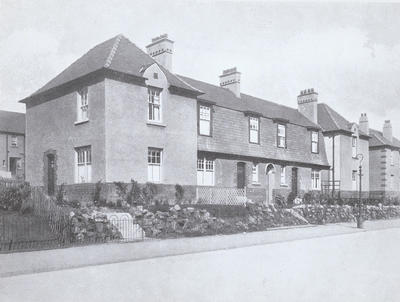
In Scheming, Damer has sought to re-emphasise the unique nature of Glasgow’s ‘tiered’ housing system, present between 1919 and 1956, which classified its council housing areas into three types: ‘ordinary’, ‘intermediate’ and ‘re-housing’ (from highest to lowest quality). He is able to demonstrate this system’s links with what came before, especially the social regulation of the sanitary authorities and the construct of the ‘deserving’ poor, and established its influence on housing practices that followed. However, Edinburgh, my area of study, did not have the same system as Glasgow and its housing policy diverged from the largest city’s in several ways. This has me thinking about how deeply Edinburgh’s system of housing allotment in the inter-war years has affected its own urban identity (and given Glasgow’s experience, I believe it will be a fundamental determinant) and into which category do my own schemes fit.
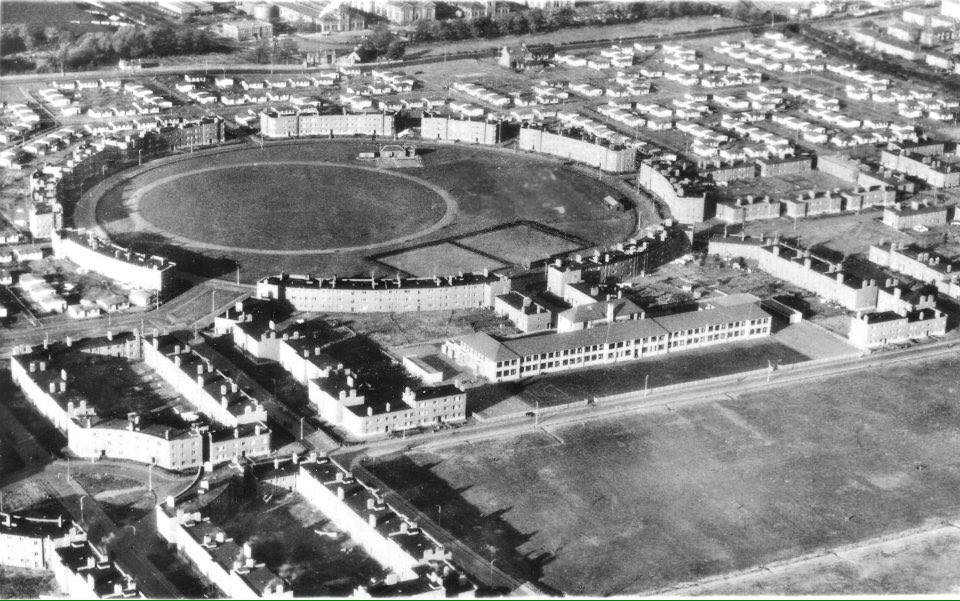
Both Pilton and Craigmillar were built in the interbellum and would be worth areas of research along Damer’s lines. Pilton itself was a rural area for centuries; the farms there were common names among the livestock and produce auctions in Edinburgh, and famed especially for their turnips. The trade was evidently bountiful – in 1861, George Stenhouse, the proprietor of West Pilton farm was reported to have thrown a dinner party for all sixty of his servants![1] Stenhouse also owned a property in Clermiston, large enough to house up to 30 cattle.[2] Clearly he was a rich man and his neighbours in Windlestrawlee and East Pilton do not seem to have fared much worse. Up until the 1920s, the area’s character was thoroughly agricultural despite the encroachment of industry along the dockside at Granton and housing developments at Trinity.
The land for the East and West Pilton estates was purchased in sections from 1932 onwards, from the estates of Barnton, Sauchie and Bannockburn. 122 acres was purchased at a price of £31,080 for East Pilton and 118 acres for a price of £41,890 for West Pilton, in 1932 and 1935, respectively.[3] This meant that the first houses constructed in East Pilton would have been built under the Greenwood Act, but the houses in West Pilton built under the provisions of the later 1935 Housing Act, under which subsidies for general needs housing were abolished and slum-clearance had become the focus. These housing acts, as Damer has shown, shaped the form and quality of the housing built to a significant extent, with the ‘re-housing’ type built under the slum-clearance provisions and usually to the lowest quality. The importance of this to understanding both the material reality of living in Pilton and in understanding the negative image that the area acquired is fundamental. While Damer demonstrates that most of the areas in Glasgow’ three-tier system acquired a bad name in the city, the difference in social life, in council provisions and in the way that residents regarded outsiders and newcomers could be stark.
Placing Pilton into a tier-system might become a job into itself when it comes to writing a history of the area. By all means it may be that this tier-system is not sufficient to explain housing inequalities in Edinburgh. This will form a fundamental question of my PhD research next year and one that I look forward to answering.
[1] The Scotsman, Wed 06 January 1861 p.2
[2] The Scotsman, Thurs 19 March 1863 p.3
[3] The Scotsman, Thurs 19 May 1939 p.6
 Aaron Colin Sheridan